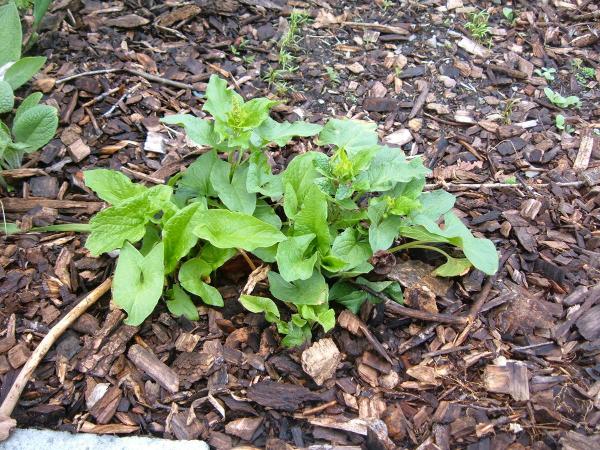
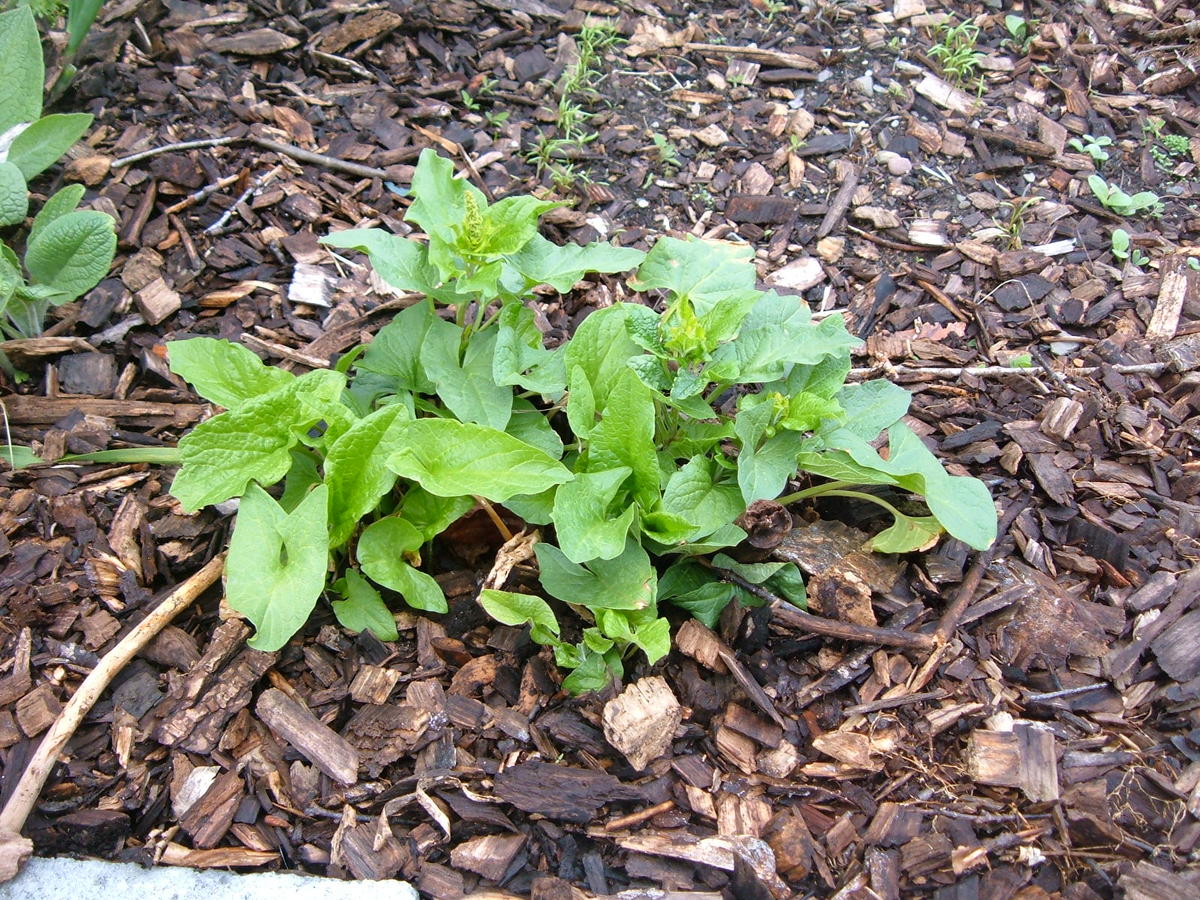
Chenopodium bonus-henricus - good King Henry

Your rating: None Average: 2.5 (2 votes)

GKH in flower

Eric Toensmeier - writer, trainer, plant geek - www.perennialsolutions.org

Early Spinach (Good King Henry)

Low clumping (size 2x2 feet) perennial. Large deep root. Early blanched spring greens or eat the spring flower shoots like asparagus (cook with butter and garlic)

Before the industrial revolution Early Spinach was used as a food in England. With heavy additions of manure added, the spring flower shoots were blanched and then eaten as an early "asparagus". In our garden we mainly eat the leaves cooked before the plant starts to flower in the spring. This early spinach is one of the first green plants in our garden right at the end of winter. Cook with other early greens like Spinach vine, Garlic chives, and Come-again sorrel for a nice post-winter meal.

We grow early spinach as a clumping herb in the understory of larger plants. It does well under the partial shade of our asian pear, and as long as you give it space it can live among other similar or larger size perennial vegetables. I would like to try growing it in a large group, and feed it large amounts of manure (Martin talks highly of it in his new book.

Order plants from permaculturenursery.com

herbaceous perennial vegetable

Good King Henry is a reliable low-maintenance perennial vegetable. It grows for years with neglect, tolerates partial shade, and seems to have no pest problems.

Problem is, it is not a fantastic food plant. Just a good one. Any time you want to cook up some greens you can add some good King Henry and you won't be dissapointed. Just don;t try to eat it raw, it is pretty gross.

With that said, I'm told that when well-fertilized the shoots make a very good vegetable with a long season of cutting. Our unfertilized plants make some shoots but they have not rocked me. We'll give it a try next year.

As I mentioned in Perennial Vegetables, this species could be the grandparent of all manner of new perennial vegetables by crossing with magenta lambs quarters, huauzontle, and quinoa, much as wild cabbage is the parent of cabbage, broccoli, and kales.

Please share your experiences cooking and growing good King Henry, I'd love some tips.

Shoots of good King Henry just past the eating stage (leaves still fine to eat):

Incredible taproots of good King Henry - probably a great mineral accumulator:


Eric Toensmeier - writer, trainer, plant geek - www.perennialsolutions.org

Wiki Access

Click here to become a Wiki Member and get full access to our content!

Forest gardens with this species

User login

To prevent automated spam submissions leave this field empty.